

WEGOTCHA
Free Activity Ideas
HOW WE HELP PEOPLE
Activity Resource Centre
At WeGotCha, we believe that adventure education is a powerful tool for personal growth and development. Our founders, who are experienced adventure educators themselves, created this resource to make high-quality adventure education supplies available to everyone. We also offer free resources for youth workers and educators to help them provide facilitative adventure therapy sessions using our equipment.
Our passion for adventure education and our commitment to quality have made us a trusted source for adventure education supplies. We work hard to provide the best equipment and resources, while also keeping our prices affordable. We believe that everyone should have access to the benefits of adventure education, and we are dedicated to making that a reality.
Below you will find a collection of games and activities free for use.
Before launching into the first games that come to mind it may be really
helpful to consider a few things first. Below is a few key points to take into
account to get the most out of those unplanned moments.
Intentionality.
Before running an activity, think first about the outcome — what you want your students to come away having learnt or experienced.
Fun is guaranteed, so let’s be intentional about using that fun to build something meaningful.
Timeframe.
Are you filling five minutes or an hour? The timeframe shapes everything — from the pace to the depth of learning.
Resources.
What equipment do you have available?
There are countless games and activities you can run that teach, build, and inspire —
even without any expensive resources.
Mixer Activities
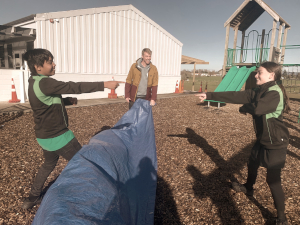
Magic Wall
5–10 minute game that is great for learning group members' names.
Divide students into two groups. Raise a tarp or blanket of some sort between the two groups (the point is that neither team can see each other).
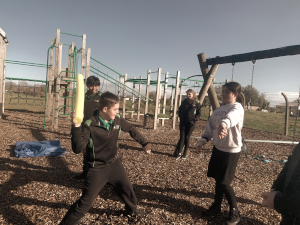
Name Bop
5–10 minute name game. Name Bop is a fun and easy game to play.
Go round the circle and have everyone share their name. From here have a facilitator stand in the middle with the foam noodle.
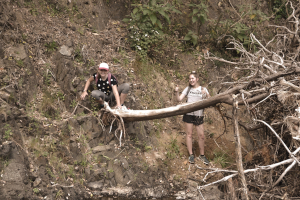
Pair Up
5–10 minute mixer where students mix and mingle to find their partner.
As students arrive, briefly welcome them and place a label on each student’s back. Have them sit down, but they are not allowed to discuss labels until you give the signal.
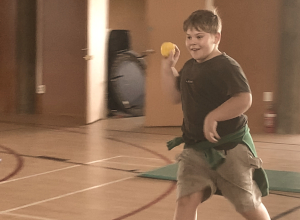
Astroid
10–20 minute game. A hit favourite alternative to dodgeball.
Distribute at least one tossable item to every person — fleeceballs, foamballs, sockballs, anything that won’t leave a kid crying if thrown too hard.
Quick Math
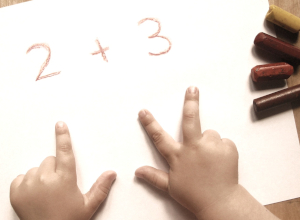
5 minute mixer. Quick-fire finger sum game.
Students meet in pairs with one hand behind their back.
Toe Touché'
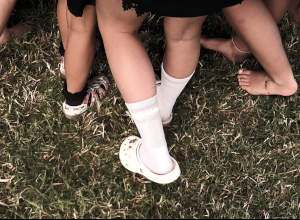
5–10 minute mixer where players dance as they attempt to tag others' toes.
This can be played in partners as a knockout tournament or as a game where everyone is “it”.
Chuck The Chicken
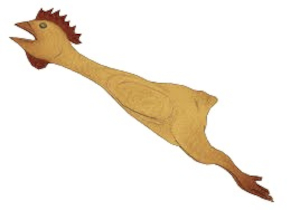
10 minute game. A crazy high-energy favourite to burn off steam.
Split players into two equal teams. Both teams line up on opposite sides of the play area.
Keep the space reasonably small — otherwise points will rack up fast.
Set a time limit or a point goal to finish the game.

Rubber Chicken Run
10–20 minute game. Two teams race to grab the rubber chicken.
Form two teams by lining up the kids in two lines. Number the students (e.g., 1–10) so the person opposite them has the same number.
Place a rubber chicken (or something silly) in the middle, with a decent gap so they have to sprint to grab it.
Under Over Relay
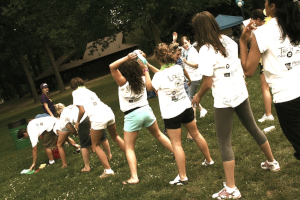
10–20 minute game. A team relay challenge with a rubber chicken.
Have players line up in groups of six to ten, standing one arm’s length apart.
Demonstrate how to pass the ball over someone’s head and under someone’s legs.
The person at the front of each line holds a rubber chicken.
Mark out a clear start and finish line.
Trust Building Activities
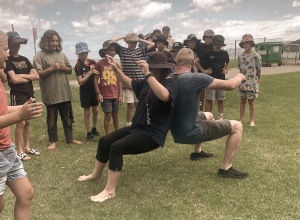
Stand Together
10 minute activity that builds trust and awareness as partners stand together.
In pairs, students try to stand up while sitting back-to-back.
Students begin seated on the ground, backs touching, knees bent, and feet planted firmly.
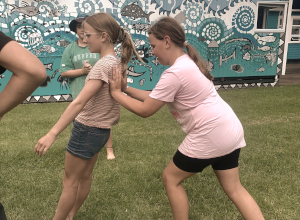
Partner Trust Fall
5–10 minutes. Students practise trusting their partner by falling back into their arms.
Students split into pairs. The aim is to slowly build trust by completing a series of trust falls.
The faller keeps their body stiff with feet planted, then falls back into the arms of their partner, who stands behind with arms outstretched.
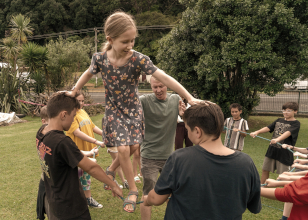
Circle of Trust
15–30 minutes. A group trust-building activity exploring our support structures.
Preparation: Tie a rope into a circle large enough so each participant can hold around half a metre of rope.
Invite the group to spread out evenly, holding the rope with palms facing up, and lean backwards together.
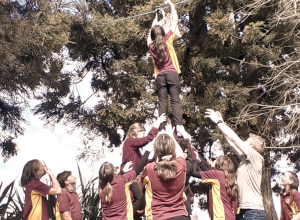
Reach For The Sky
30 minutes. The group considers and executes a plan to reach a high goal.
Hang a bag of lollies in a tree at a height too high for any one person to reach — ideally around 3 to 3.5 metres (roughly the height of two to two-and-a-half students).
Make sure the space below is clear and wide enough for students to gather and safely build a human tower.
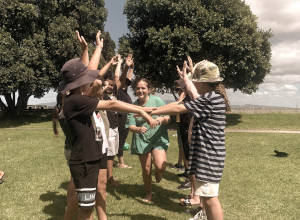
Run the Gauntlet
30 minutes. Willing members trust the group and run through a wave of hands.
Ask students to stand in two lines facing each other with their arms out.
Invite a volunteer to run through the centre at a speed they feel comfortable with, while the group raises their hands out of the runner’s way just before contact.
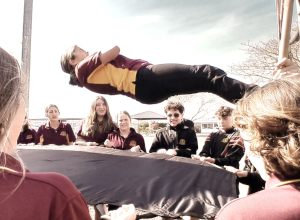
Group Trust Fall
Group trust-building activity. Minimum of 11 students required.
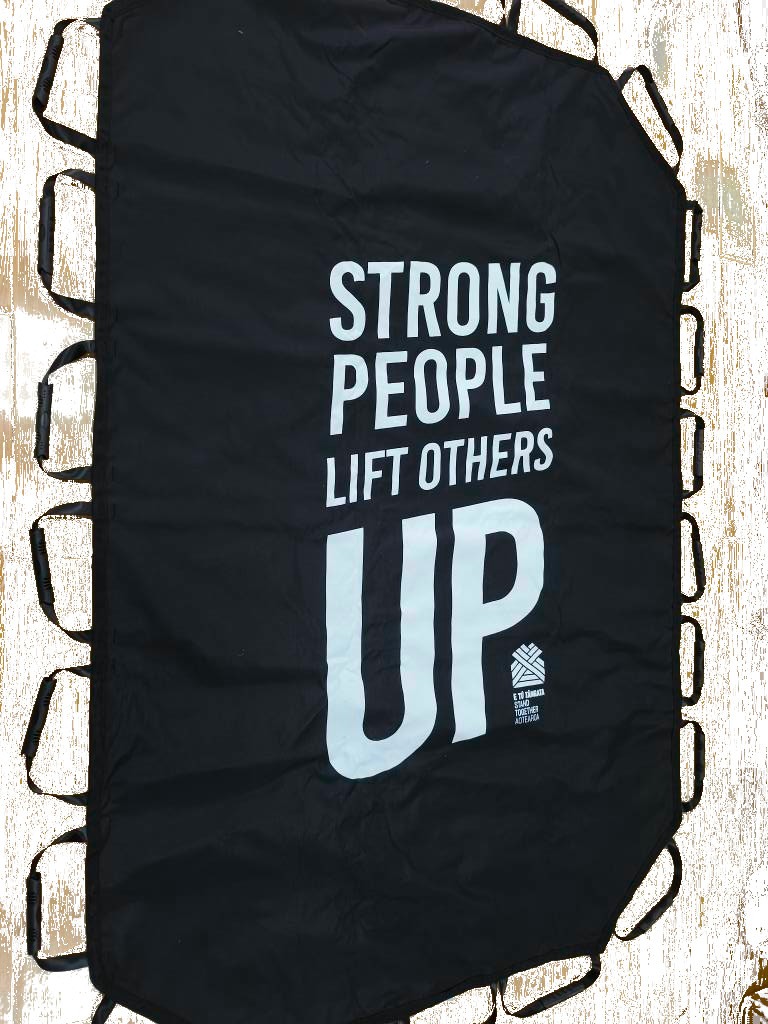
Lay the Trust Fall Mat on the ground and ask students to gather around three sides, each holding one or two handles depending on numbers.
Students should hold the mat tight with elbows tucked in, palms up, and one leg forward for stability.
Problem Solving Activities
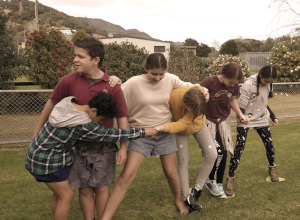
Stepping Stones
20 minutes. A stepping-mat challenge where students must cross from start to finish.
Students are given a set of mats to step on as they attempt to cross a designated area without touching the ground.
You will need one or two fewer mats than the number of students in the group.
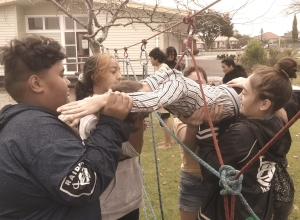
Spider Web
20–30 minutes. Work as a team to get everyone through the spider web.
Set up two trees or poles roughly three metres apart.
Tie one rope at head height and one at ground level, then use additional ropes to weave a spider-web style pattern.
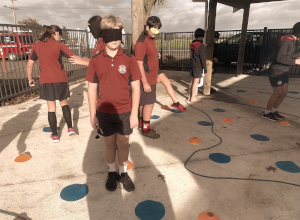
Mind Maze
15–30 minutes. Blindfolded partner guided through a minefield by voice.
This activity gives students the chance to experience verbal communication without sight.
It’s a powerful exercise in trust, active listening, and clear guidance.
Set up a “minefield” by placing around sixteen cones in a marked area and laying rope as an “electric wire”.
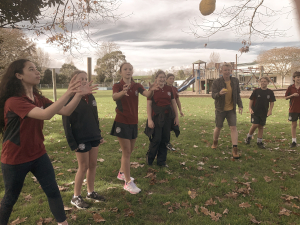
Group Juggle
15–30 minutes. Explore how to pass three balls around the circle at once.
Split into two groups of 10–20 people and form circles facing inward.
Begin with one tossable item and establish a passing sequence.
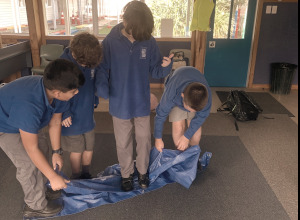
Flip The Tarp
15–20 minutes. The group must work together to untangle themselves.
The Human Knot is a classic team-building activity where the group forms a circle, grabs random teammates’ hands, and works together to untangle without ever breaking their hold.
It’s equally tricky every time — no matter how often you play.
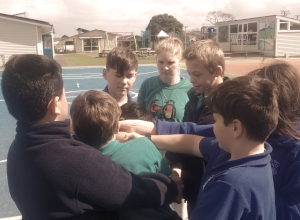
Human Knot
5–10 minute mixer where students mix and mingle to find their partner.
As students arrive, briefly welcome them and place a label on each student’s back. Have them sit down, but they are not allowed to discuss labels until you give the signal.
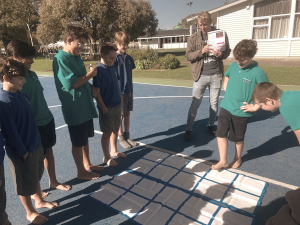
Fail Forward Maze
15–30 minutes. Navigate an invisible maze as a group to succeed together.
Set up a 10 by 4 grid using flat cones.
On a separate piece of paper, draw the same grid and secretly mark the correct 10-step path students must follow to reach the other side.
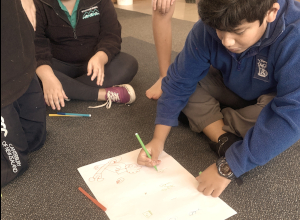
Team Drawing
10–20 minutes. Teams communicate to draw an unseen image.
Create teams of three and assign roles: a viewer, a communicator, and a drawer.
The viewer is the only person allowed to see the original picture. Their job is to explain the image to the communicator.
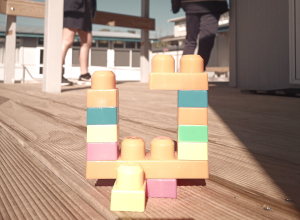
Block Builder
10–20 minutes. Teams communicate to build an unseen block formation.
Create teams of three and assign the roles: a viewer, a communicator, and a builder.
The viewer is the only person allowed to see the original block structure. Their job is to describe it clearly to the communicator.
Need Something For You?
Your wellbeing matters too.
Check out michaelwilkes.kiwi for practical, inspiring resources designed for adults who want to grow alongside the young people they care about. From the 10-Day Life Mastery Course to the powerful book The Unschooled Life , these tools will help you build grit, grace, and resilience—and turn life’s challenges into your greatest growth.
Be equipped with the same tools and insights we teach our rangatahi—and more.
Gallery
The Team in Action


Get In Touch!
Keen to Connect?
Whether you’re curious about what we do, want to purchase a trust fall mat, or simply have a question—drop us a line.
Just shoot us a message using the form on this page
We look forward to hearing from you!
Drop us a message!
Contact
Navigation
Stay Informed - Get Our Newsletter!
©2026 . All Rights Reserved | Privacy Policy