

Library
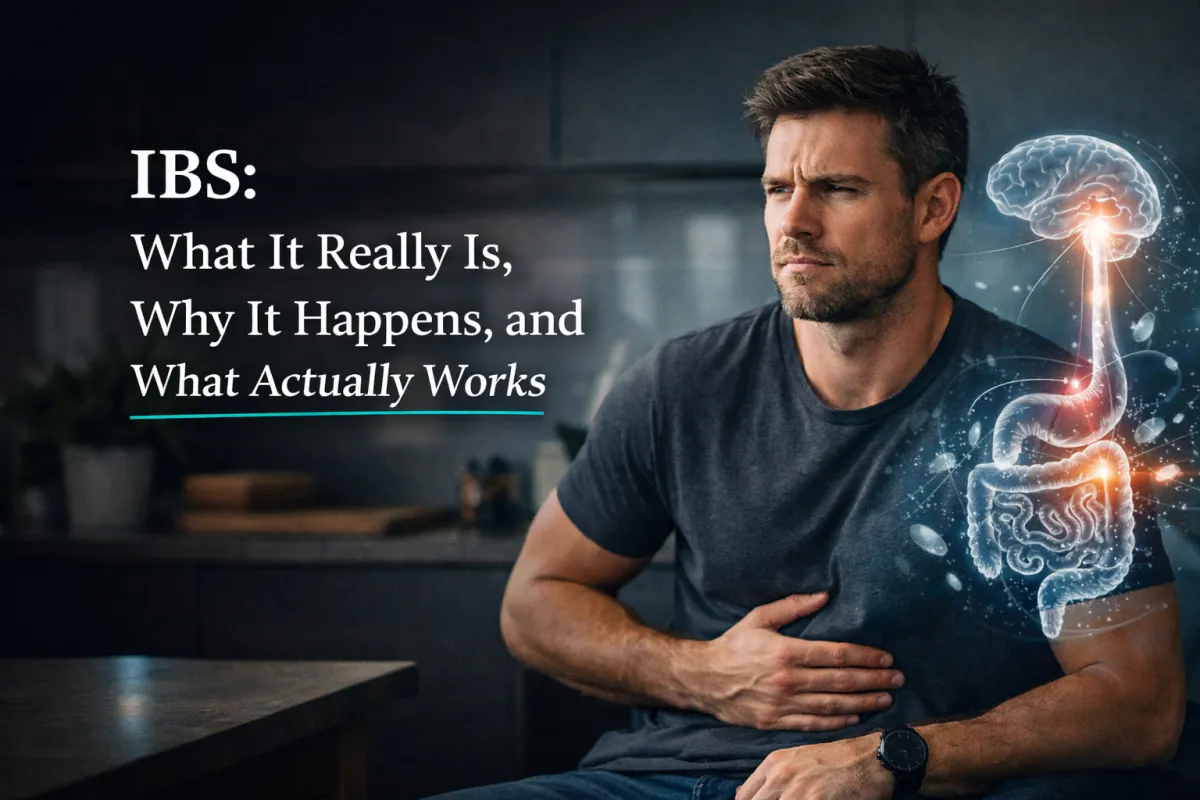
What is IBS? Learn the real causes and what works to improve gut health long-term.
Irritable Bowel Syndrome (IBS) is one of the most commonly diagnosed digestive conditions in the world. It’s estimated to affect up to 10–20% of the population, yet despite its prevalence, it remains widely misunderstood.
Most people are told they have IBS after experiencing symptoms like bloating, abdominal pain, constipation or diarrhoea. But here’s the key issue:
IBS is not a diagnosis of cause — it’s a label for a group of symptoms.
And until that distinction is understood, progress is often limited.
What Is IBS? Understanding the Diagnosis
IBS is classified as a functional gastrointestinal disorder, meaning there is no obvious structural damage or disease visible in standard medical testing.
Instead, it’s diagnosed based on symptom patterns — typically recurring abdominal discomfort combined with changes in bowel habits.
While this helps categorise the condition, it doesn’t explain what’s driving it.
👉 It tells you what you feel, not why it’s happening.
What Causes IBS? The Modern Understanding
Research over the past decade has shifted significantly. IBS is no longer seen as just a digestive issue, but as a condition involving multiple systems working together.
1. Gut Microbiome Imbalances
One of the most consistent findings in IBS research is dysbiosis, or an imbalance in the gut microbiome.
Individuals with IBS often show:
Reduced diversity of gut bacteria
Lower levels of beneficial species like Lactobacillus and Bifidobacterium
Higher levels of potentially inflammatory microbes
This imbalance affects digestion, nutrient absorption, immune signalling and overall gut function.
👉 In simple terms, the ecosystem in the gut is no longer balanced.
This disruption can also impact the integrity of the gut lining, which plays a critical role in regulating what passes into the bloodstream.
If you want to explore this further:
Leaky Gut Syndrome → https://healthwealthgroup.com.au/blog/b/leaky-gut
2. The Gut–Brain Connection
The gut and brain are constantly communicating via the nervous system.
In IBS, this communication can become disrupted, leading to:
Increased sensitivity to normal digestion
Altered bowel movements
Greater response to stress
This is why many people notice symptoms worsen during periods of stress — it’s not just psychological, it’s physiological.
This connection is one of the most important — and most overlooked — drivers of gut health.
Read more about this here:
The Gut-Brain Connection: How Gut Health Impacts Mental Well-Being → https://healthwealthgroup.com.au/blog/b/the-gut-brain-connection-how-gut-health-impacts-mental-well-being
3. Digestive Function and Gut Integrity
Emerging research also highlights:
Poor digestive enzyme function
Altered stomach acid levels
Increased intestinal permeability
These factors can contribute to:
Incomplete digestion
Increased inflammation
Ongoing irritation of the gut lining
4. Post-Infectious IBS
IBS can often develop after:
Food poisoning
Gastrointestinal infections
Antibiotic use
This is known as post-infectious IBS, where long-term changes in the microbiome and immune system continue even after the initial illness has resolved.
Why IBS Is Often Misunderstood
The biggest issue with IBS is how it’s approached.
It’s often treated as the condition itself, rather than a signal of underlying dysfunction.
This leads to:
Repeated elimination diets
Ongoing symptom management
Trial-and-error approaches
Without ever identifying what’s actually driving the problem.
Current IBS Treatments (and Their Limitations)
Dietary Approaches
Protocols like the low FODMAP diet can reduce symptoms in the short term.
However:
They don’t address root causes
Long-term restriction can reduce microbiome diversity
Medications
Common prescriptions include:
Antispasmodics
Laxatives or anti-diarrhoeals
Pain-modulating medications
These can help manage symptoms but do not resolve the underlying issue.
Supplements and Probiotics
There is growing research supporting the use of probiotics, but outcomes vary significantly depending on:
The individual
The strains used
The underlying cause
Stress and Behavioural Therapies
Approaches like cognitive behavioural therapy (CBT) and gut-directed hypnotherapy can be effective, particularly due to the gut–brain connection.
What Actually Works: A More Effective Approach
The research is becoming increasingly clear:
👉 IBS is not one condition — it’s a combination of underlying factors.
Each of these factors — microbiome balance, gut integrity, and nervous system regulation — is interconnected, which is why a fragmented approach often falls short.
1. Identify the Root Cause
Instead of guessing, the focus should be on understanding:
Microbiome imbalances
Digestive function
Inflammation markers
This is where testing becomes valuable.
Rather than relying on guesswork, structured testing allows you to identify the specific imbalances driving your symptoms and build a targeted plan.
Learn more about: Microbiome Testing → https://healthwealthgroup.com.au/microbiome-test
2. Support Digestion
Improving how the body breaks down and absorbs nutrients is essential.
This may include:
Enzyme support
Meal timing and structure
Addressing stomach acid levels
3. Rebuild the Microbiome
Once imbalances are identified, the goal is to restore balance through:
Targeted supplementation (where appropriate)
Increased dietary diversity
Fibre and prebiotic support
4. Regulate the Nervous System
Stress plays a direct role in gut function.
Improving:
Sleep
Recovery
Stress management
can have a measurable impact on symptoms.
Your gut doesn’t just respond to what you eat — it also responds to your environment, stress levels, and emotional state.
👉 This deeper connection is explored here:
Your Gut: The Theatre of Your Emotions → https://healthwealthgroup.com.au/blog/b/gutbrainconnection
5. Build a Sustainable System
Short-term fixes don’t create long-term results.
The goal is to develop a system that supports:
Consistent digestion
Stable energy
Long-term gut health
From Guessing to Understanding
The biggest shift in managing IBS is moving away from:
❌ Cutting more foods
❌ Trying random supplements
❌ Managing flare-ups
And moving toward:
✅ Understanding what’s driving the symptoms
✅ Addressing the root causes
✅ Building a structured, personalised approach
Final Thoughts
IBS is not something you simply “have.”
It’s a signal that something within the system is not functioning optimally.
When you address:
The microbiome
Digestive function
The nervous system
Lifestyle factors
You move beyond symptom management and start restoring function.
Ready to Take the Next Step?
If you’ve been dealing with ongoing gut issues, the goal isn’t to keep guessing.
It’s to understand what’s actually going on — and build a structured plan to fix it.
👉 Start with a deeper look at your gut:
Microbiome Testing → https://healthwealthgroup.com.au/microbiome-test
Or if you’re ready for a complete, guided approach:
👉 Gut Health Healing Program → https://healthwealthgroup.com.au/guthealthhealingprogram

Subscribe to the monthly blog